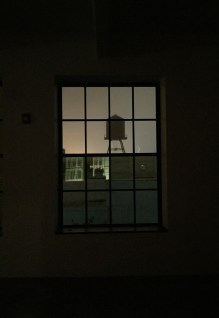
Last Saturday I was lucky to attend a special evening with some very generous artists on the stage. I found the place randomly, even though it’s 4 blocks from my place. I was looking online an inspiring text about creativity to practice my writing skills, and Google direct me to this place. Two words: creativity and performance. And actually those two words it was what I experienced.
We arrived late. I don’t know if the website was wrong or I wrote wrong the time. We came in between performances. There wasn’t any lobby, entrance or reception; you walk directly into the stage. Probably it just had finished a performance, and exactly the music. The place was in absolutely silent and intimidating. We were afraid to be interrupting a performance or getting inside of the living room with unknowns. Suddenly the music started again and the chattering is back. I talked with Brian, who was working at the bar, about how intimidating was the first encounter with that silent place. I ordered a beer and we found a place to see what it was a magic night.
Orlando Estrada was the first performance that we saw that night. It was the darkest. He worked with electronic music to create a dark environment, using spirals and strobe lights. It remembered me a pair of analogic DJs, Loud Neighbor, which I saw recently. They create techno music with very archaic and analogic machines. In this case, Orlando tried to imitate the same idea but with a darker and less harmonic musicality. The last cathartic moment it represented the power of the phallus, with his microphone deep inside in his mouth. After this image is tattooed in our retinas, lights went on. In this bright moment I realized how immerse I was into the performance. How audience, performer, music, lights transported us to another reality, where the only important thing is the present.
Kulpeed Singh presented us a traditional Indian dance. He carried a metallic water vessel and the music of water infiltrates the ambience. He started to dance in a slow motion, taking care of each sensation in his body, dedicating long pauses to one leg balance standing and precise hand movement. As audience we follow him in each body decision. His body and mind are one and we, as an audience, accompany him. It was a beautiful and intimate performance with a soundscape of water and singing that helped us to lose ourselves in his landscape.
A female body reappeared, subtle into the shapes. The idea of a soft female body excited me, after all daily attacks in the female super sexy bodies, where me as women I don’t find myself identified with those bodies, but neither with the feminist group. I felt an outsider on my own sexuality and her representation. That is why it was so deeply calm in my soul with this representation of the female body inside of a male body. When the performance ended I felt a deep appreciation with the artist to share his intimacy and allow us to make ours.
The last performance was the longest and deepest, Keijan Thomas, indulge us with a generous performance. He came naked but during the performance he undressed his soul in front of us and use the audience as a channel to a communal experience. It was a trip. I won’t get into details because it’s better to live the experience without judging his generous way to give into the stage. What I enjoyed the most it is the experience. It was real. It was just present.
I am tired to see performances that the performers are outside of themselves. Where performers are merely workers. They are repeating the same movement; same text but they are not showing the soul. They are not showing what the human soul is like. They are merely performing because they want a good review, sharing their work and doing the next new thing. It happens when you are not a performer you are a worker of the institution of the art. I enjoyed the most to see and reveal the work of a person into the stage.
Curiously all performances represented by men of the LGTB collective. I am really proud of the work of the LGTB collective. I think it’s more sincere and deep as other type of work. They describe in a deepest and precise way the female idiosyncrasy. I can see on them the primary female essence, outside of the superficial imaginary of the women.
We as a women have to many complexes. We live surround through the media and experts that know better than us, apparently, how precisely a woman have to be and feel. We have to suffer in our skin, the external ideas about a female body. The female body is already a brand. The commercial sells our body. Our female body doesn’t belong to us anymore. Belong to the advertisement, to the world, to the LGTB collective. For that is why I can see better those new ideas about femininity through the gay collective. They embody the female imaginary that it’s already on the collective imagination. The female body no longer belongs to us.
It was a night of sharing and intimacy. The public and performers merge into one. Just being present. The audience felt important and include on the performance because our attention and presence was necessary to create the evening as well. I appreciate the work of Esther and Brian; owners of the space, where they allow bringing the essence of a real performance.
 mariolabriales
You must be logged in to post a comment.